Kia ora e hoa mā,
November was indeed hectic, but productive and energising. Above all, te Hīkoi mō te Tiriti was amazing. Many of our members took part, in Ngāmotu and/or Pōneke. Thanks to Ngāneko Eriwata for organising, almost 3,000 people took part in te Hīkoi in Ngāmotu. Watch the sea of 42,500 plus people who marched the streets onto Parliament and listened to the kōrero on Te Ao Māori News and with Moana Maniapoto. Toitū Te Tiriti!
Thanks to everybody who came in support and listen to our presentation at the Waitangi Tribunal Climate Change Inquiry last week. Te Whare Hononga provided a special space for the hearing, thanks to Taranaki Cathedral. Te Korimako o Taranaki and Chris our sound man did a great job with filming and sound. If you missed the hearing, here’s the official recording (the first 1 hr 48 mins).

News
Seabed mining AGM disrupted
On the 28th November, in Sydney, Rukutai Watene and Peeti Wharehoka-Watene of Ngāti Ruanui and six Greenpeace activists disrupted the annual general meeting of Manuka Resources, owner of Trans-Tasman Resources (TTR). The company’s proposal to mine the seabed off Pātea has been listed for Fast-Track Approvals by the government, despite multiple court rulings against it. The action was an effective show of resistance while Cook Islands environmental groups demanded proper consultation and priority for people and natural heritage over economic gains.
Underwriting the fossil fuel industry
As we write, the Crown Minerals Amendment Bill is heading onto the third reading in Parliament. Meanwhile, Minister Shane Jones who visited Ngāmotu for an invite-only Regional Growth Summit, touted the idea of an ‘adverse event clause’ to underwrite or derisk oil and gas exploration, as lobbied by the industry. Rather than putting a dying industry on life-support, our group advocates transformative changes to reduce overall energy and material demands and focus on wellbeing for people and te taiao. Oxfam’s ‘Closing Time’ report (Dec 2023) offers 19 recommendations for government to deliver a just transition to end fossil fuel production in Aotearoa. CJT’s recent presentation to the New Plymouth District Council included some local ideas and the rationale behind.
COP29 – UN Climate Summit
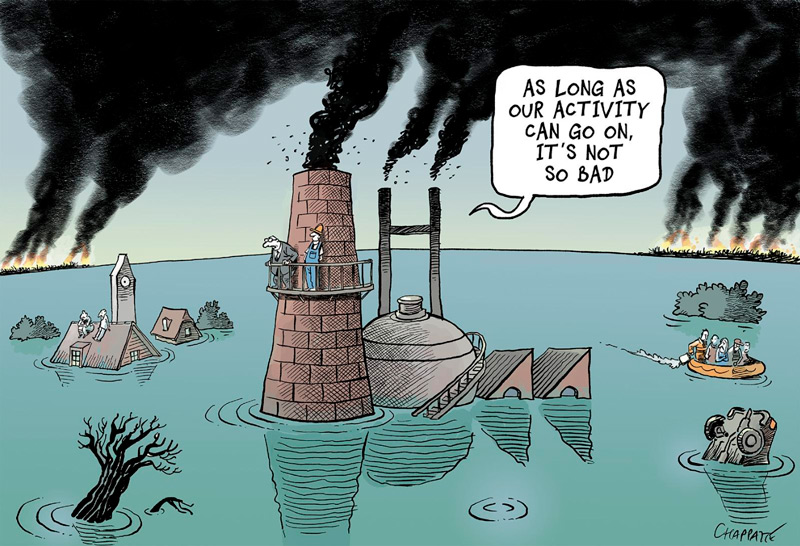
While you may be cynical about the United Nations and diplomatic processes, the climate crisis is a global problem, and it pays to be aware of what is happening on the global stage. Given that the President of the host state Azerbaijan declared oil and gas a “gift of God’, it’s not surprisingly that no decision was made on how nations should or could transition away from fossil fuels. At US$300 billion a year by 2035, the summit under-delivered on the level of climate finance that developing countries called for. NZ has announced a $20 million contribution to the Pacific Resilience Facility and $10 million to the global fund for Responding to Loss and Damage. The summit did deliver some global standards for carbon trading which should in theory support developing countries in building renewable energy capacity, although there are significant risks.

Pacific nations go to the International Court of Justice (ICJ)
A week after the UN summit ended, the ICJ is holding a two-week hearing in The Hague on the obligations states have under existing rules and agreements to tackle rising greenhouse gas emissions and the consequence should they fail. 98 states will speak at the hearing which is seen as a culmination of years of campaigning by a group of Pacific island law students who secured support of the government of Vanuatu to spearhead diplomatic negotiations. The court will hear statements not just by lawyers and politicians but also people at the frontlines of climate change. The ICJ is expected to publish its advisory opinion in late 2025.
Submissions
NZ’s second National Determined Contributions (NDC2), by 8 Dec
The Ministry for the Environment is seeking feedback to inform the Government’s decision on NZ’s NDC2, our climate change target for 2031-35. Our suggestion would be to ask for the most ambitious target possible, domestically, not relying on offshore offsets. Just yesterday the Commission released its first review of the 2050 target and said, “Our analysis shows the country has options available to not only get on track to the current target, but to increase Aotearoa New Zealand’s contribution to global efforts to limit average warming to 1.5°C. Responding to the significant changes requires further and faster reductions on both sides of the split gas target – and this is possible… The more that is done now to ensure a smooth transition for sectors, communities, and households, the better off the country and New Zealanders as a whole will end up.” You may want to recommend at least a 69% reduction on 2005 level by 2035 which is the greatest reduction possible according to the Climate Change Commission’s report on the potential NDC2, despite its current shortfall .and earlier challenge by the Lawyers for Climate Action.
Emphasize on systems changes rather than reliance on high tech, especially unproven technologies. Take the holistic approach to ensure that natural ecosystems and indigenous biodiversity are not sacrificed in the name of emissions reduction. Make it ‘just’ so that Aotearoa NZ is doing its fair share at the global level while supporting Māori and marginalised communities who may be disproportionately impacted. Make it real by matching targets and NDCs with effective policies and on ground actions that genuinely reduce emissions, fast.
You might like to mention the UK’s ambition to reduce emissions by 81%, just bear in mind that it relies in part on carbon capture and nuclear power. Answer the five questions on MfE website or write your own. Consultation ends on 8 Dec. CJT’s submission is here.
Treaty Principles Bill, by 7 Jan 25
Please submit against the Treaty Principles Bill. Be authentic, be creative or just write, speak or sing from your heart. There are plenty of resources online, submission guides (e.g. from Action Station, PSA), and submission workshops, parties or café (see below), on and offline, if you’d like a bit of help or want to help others. We have until the 7th Jan 2025 to submit via the Parliamentary website.

Events
Palestine Solidarity Picnic, 7 Dec 1pm
At the New Plymouth District Council Te Huinga Taumatua meeting earlier this week, Parihaka kaumatua Dr. Ruakere Hond delivered a powerful deputation alongside Palestinian Solidarity Taranaki (PST). Watch the recording here (10’30”-01hr).
On this Saturday 7 Dec, 1pm at The Landing, PST invites all supporters to a community-building picnic. Gather to be the conscience of our government, to remind them of our nation’s commitment to peace, humanitarian law and human rights. Moreover, Palestine is a climate justice issue, join the BDS movement. More details on Palestinian Solidarity Taranaki page.
Treaty Principles Bill Submission Café, 20 Dec 9:30-11:00am
Let’s meet at the Green Door Café Friday 20 Dec for a morning submission writing session together. It’ll be fun and productive. It’ll also be a way for us to thank Terri and Ron for the numerous awesome community events they have hosted at the café over the years.

Community Energy Taranaki hui, monthly
The group has now selected two projects to work on and will resume monthly meetings early next year. Get in touch if you’d like to attend and be part of this exciting initiative.
}}}}}}}}}}}}}}}}}}}}}}}}}}}}}}}}}}}}}}}}}}}}}}}}}}}}}}}}}}}}}}}}}}}}}}}}}}}}}}}}}}}}}}}}}}}}}}}}}}}}}}}}}}}}
As 2024 draws to a close, do take time to reflect on the year, spend quality time with whanau and friends, immerse yourself in nature, relax and reinvigorate!

Kia wātea, kia māmā…
Nā,
Team at Climate Justice Taranaki
 Climate Justice Taranaki